

Human Dignity
Ain't all it's cracked up to be

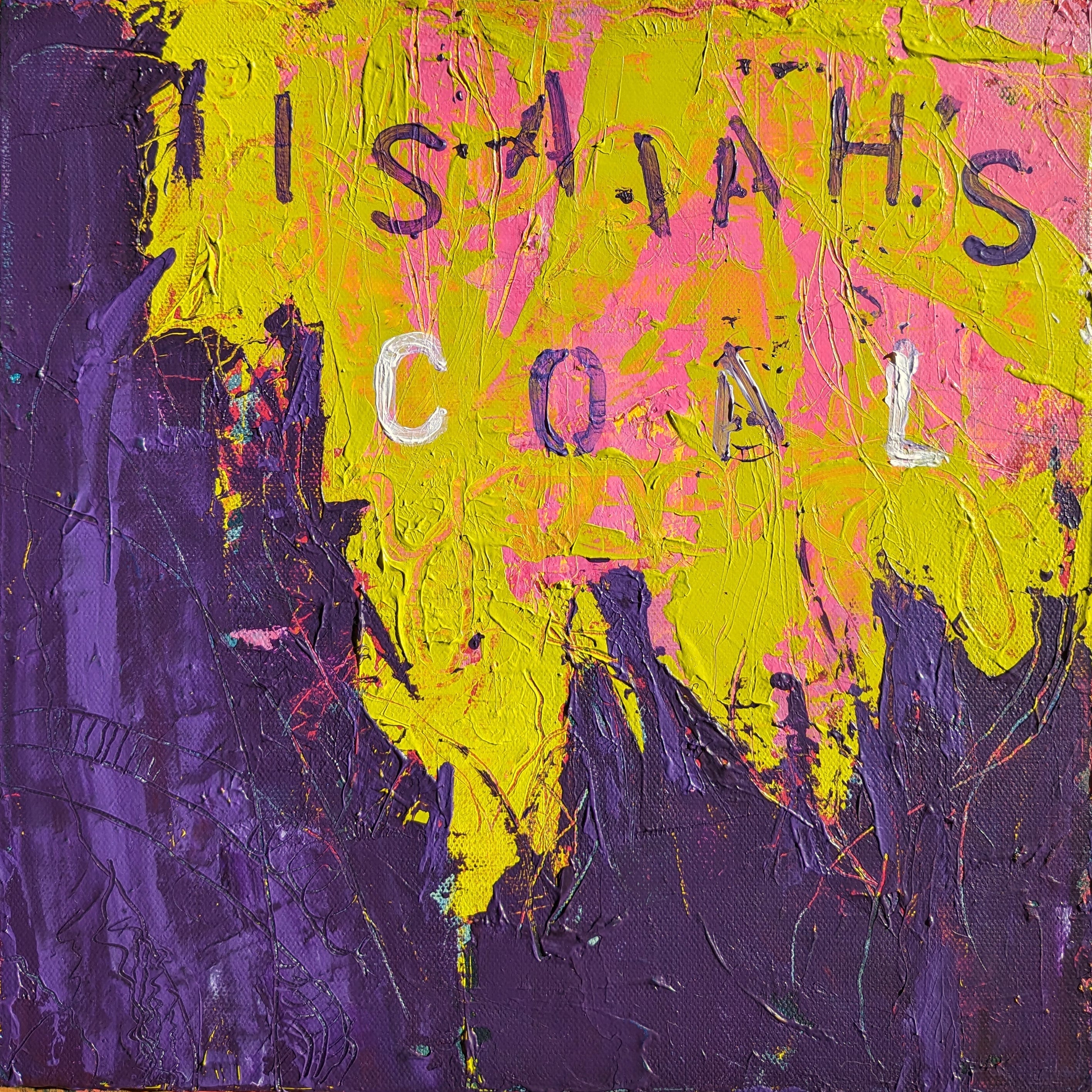
We kick off Volume II with a man in a hole. It’s a poem called Human Dignity, and the theme is that human dignity is not so great.
Human Dignity
Like the moon her kindness is,
If kindness I may call
What has no comprehension in't,
But is the same for all
As though my sorrow were a scene
Upon a painted wall.

So like a bit of stone I lie
Under a broken tree.
I could recover if I shrieked
My heart's agony
To passing bird, but I am dumb
From human dignity.
So, we’ve got a woman’s kindness that’s not good enough. It’s a generic, impersonal loveliness, kinda like that of the moon. She appreciates the poet’s sorrow, but she just isn’t perturbed by it. He wants to move her, make her as nuts as he is. Since she’s unmoved, he feels apart. He’s got all this internal energy that isn’t really doing anything other than setting his status. He’s non-reactive, inert. He has no shelter from this kind of agitation; he lies under a broken tree. He might get better if he could somehow get outside of himself, yell at a bird, connect with some other parts of nature. But his pride keeps him silent and keeps him stuck. Really his pride is why he’s stuck in the first place. His pride demands her disturbance. (He’s a jerk.) She’s not disturbed. (She doesn’t take the bait.)
Pride as craziness is one of the Big Themes in Yeats’ poetry. Its thematic mate is Love as craziness. Each is personified by a recurring character. Peter, the King-of-Peacocks, is the prideful nutter. Madge, the Nurse-of-Stones, is the love nutter. Sometimes, it’s hard to tell who’s who. Like the poet will start off as Peter and then morph into Madge. In Human Dignity, pride and love are also kinda jumbled.
Volume II starts with this poem for a few reasons:
I love it.
I’d tried before to songify it, and failed. That’s a kind of hidden, meta-theme for this volume. These are all songs that I tried once and then for various reasons gave up on. Invariably, part of the problem was that all of these poems are tricky. In Shriek Your Heart’s Agony, I was doing poems that are recognizable as pop songs — at least if you squint at them the right way. Here, in Isaiah’s Coal, the poems are funkier.
The song starts with a demo that I recorded on my phone a couple of years ago. Midway, the demo track gets swallowed up by the studio production. That introduces a recurring stylistic theme: Contrasts between the slurred rawness and noisy ambiance of extemporaneous demos, and the big clear sounds and fretted details of studio productions.
The rest of the record is a kind of response to this poem. I think Human Dignity does a nice job of setting up a core dilemma: knowing where you’re at, of being pulled in opposite directions, or even torn apart by different aspects of your nature, and not really being able to do much about it. The rest of the record is a sequence of poetic attempts at resolving that problem. Resolving both in the sense of seeing it clearly, and trying to get past it. There’s an arc. We start with this poem as a formulation of the problem. We consider some resolutions, note some difficulties, give up, descend into despair, lose the plot, ascend to swagger, and settle on a mumbled reformulation of the problem that makes less sense, but has to do. So, we go from lots of human dignity, to much less, and by doing so, we actually end up in a position where we can hold our heads a little higher.
Here’s the song. (Email readers will be redirected to the website; no audio in email.)